
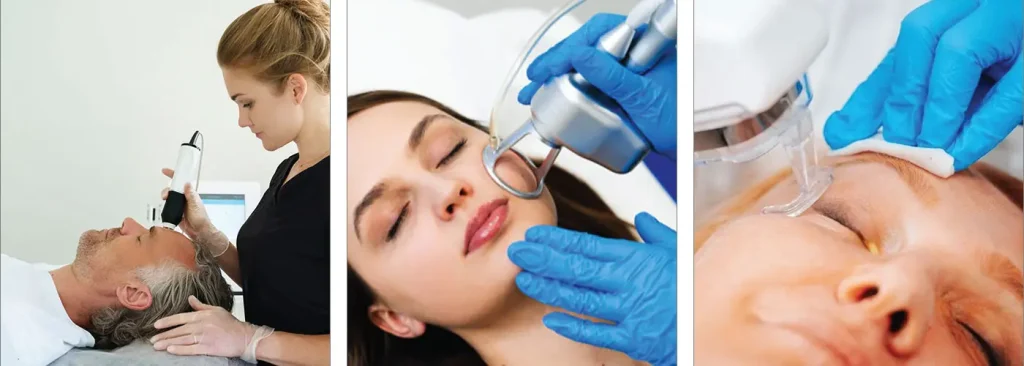
Carbon dioxide Resurfacing
Carbon dioxide (CO₂) resurfacing is a cosmetic procedure that uses a laser to remove the outer layers of damaged skin. The process stimulates the growth of new skin cells, improving the appearance and texture of the skin. It is commonly used to treat a variety of skin concerns, including:
- Wrinkles and Fine Lines: Especially around the eyes, mouth, and forehead.
- Scars: Including those caused by acne or surgery.
- Pigmentation Issues: Such as age spots and sun damage.
- Skin Texture: Improving roughness and uneven skin tone.
How It Works
- Laser Technology: The CO₂ laser delivers a concentrated beam of light to the skin, removing the outer damaged layers (epidermis) while heating the underlying skin (dermis).
- Collagen Stimulation: This heat promotes collagen production, which is essential for skin elasticity and smoothness.
- Healing: As the skin heals, new, healthier layers of skin replace the old, damaged ones.
Procedure Details
- Typically performed in a dermatologist’s or plastic surgeon’s office.
- Local anesthesia or sedation may be used, depending on the extent of the treatment.
- The procedure takes between 30 minutes to 2 hours, depending on the treatment area.
Recovery
- Initial redness, swelling, and peeling are common and can last 1-2 weeks.
- Full healing and results can take several weeks to months.
- Sun protection is critical during recovery to avoid complications and maintain results.
Benefits
- Long-lasting improvements in skin texture and appearance.
- Customizable to individual needs and specific problem areas.
Risks
- Possible side effects include redness, swelling, infection, or pigmentation changes.
- Not recommended for people with certain skin types, active acne, or those prone to keloids.
It is important to consult with a qualified specialist to determine if CO₂ resurfacing is suitable for your skin type and goals.